Quick answer: In Burnaby and Vancouver, a timing belt replacement commonly costs about CAD $800 to $1,800 before tax. A straightforward four-cylinder vehicle may be near the lower end, while a difficult engine layout or a service that includes the water pump, tensioner, idler pulleys and coolant can cost more. Some European, luxury and complex engines may exceed $2,000.
Those numbers are planning ranges—not a quote for every vehicle. The exact timing belt replacement cost depends on your vehicle’s year, make, model, engine and the parts included in the job. A proper estimate should confirm all of those details before work begins.
Timing belt replacement cost in Burnaby and Vancouver
| Typical service | Planning range (CAD, before tax) | What may be included |
|---|---|---|
| Standard timing belt replacement | $800–$1,400 | Timing belt, required seals or hardware, and labour |
| Timing belt kit with water pump | $1,000–$1,800 | Belt, tensioner, idler pulleys, water pump, coolant and labour |
| Complex, European or luxury application | $1,800–$2,500+ | More labour, specialized parts or additional related repairs |
Why is the range so wide? On some engines the timing belt is relatively accessible. On others, several covers, engine mounts and accessories must be removed before the belt can be reached. Parts quality, shop labour time and whether related components are replaced at the same time also affect the final price.
What does a timing belt do?
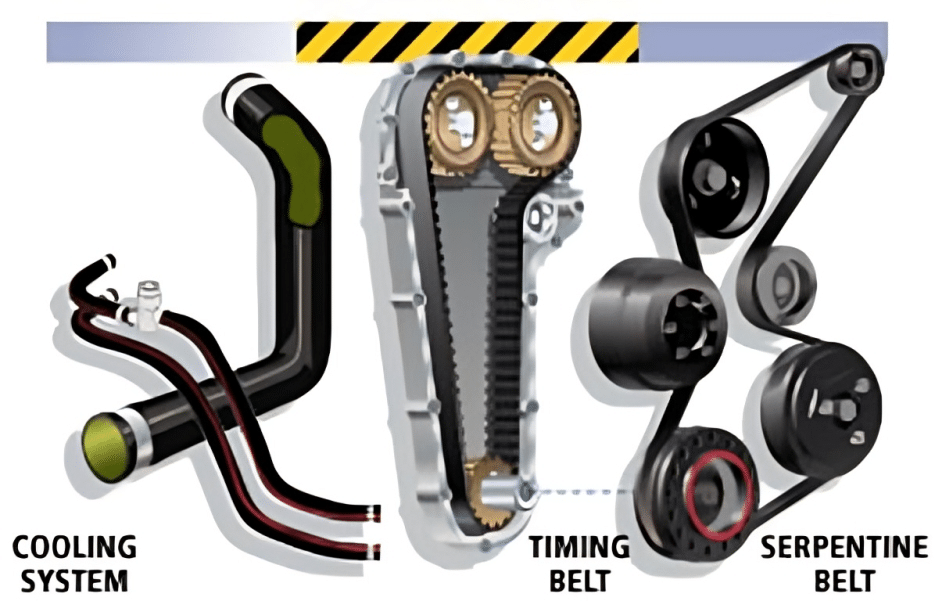
The timing belt keeps the crankshaft and camshaft synchronized so the engine’s valves open and close at the correct time. It is a reinforced rubber belt that works under heat, tension and constant motion. Unlike an accessory or serpentine belt, it is hidden behind protective covers and is critical to the engine’s internal operation.
If a timing belt slips or breaks, the engine may stop immediately. On an interference engine, the pistons can contact open valves, potentially bending valves and damaging the cylinder head or pistons. That repair can cost far more than replacing the belt on schedule.
Why the price varies by vehicle
- Engine layout: Transverse, V6 and tightly packaged engines often require more disassembly.
- Labour time: Timing belt service is precision work. The engine must be correctly supported, aligned and timed.
- Parts included: A belt-only price is not directly comparable with a complete kit that includes tensioners and idler pulleys.
- Water pump location: On many vehicles, the timing belt drives the water pump. Replacing it at the same time can prevent paying much of the same labour twice.
- Leaks or contamination: Oil or coolant leaks can shorten belt life and may require seals or other repairs.
- Parts quality: OEM or reputable OE-quality components may cost more than bargain parts, but are generally the sensible choice for a labour-intensive service.
Should the water pump be replaced with the timing belt?
Often, yes—but not automatically on every vehicle. If the water pump sits behind the timing cover or is driven by the timing belt, much of the labour overlaps. Installing a timing belt kit with the pump, tensioner and idler pulleys can be more economical than reopening the same area later.
The right recommendation depends on the engine design, mileage, service history and condition of the components. Ask for an estimate that clearly lists the belt, tensioner, pulleys, water pump, coolant, seals and labour so you can compare complete services rather than headline prices.
When should a timing belt be replaced?
Follow the manufacturer’s schedule for your exact engine. Many vehicles call for replacement somewhere around 100,000 to 160,000 kilometres or approximately 5 to 10 years, but intervals vary significantly. Some engines use a timing chain instead of a belt, and some manufacturers specify a different interval.
Do not rely on mileage alone. Rubber ages with time, heat and contamination. If you bought a used vehicle and cannot verify when the belt was last replaced, have the service history and manufacturer schedule checked. A receipt or maintenance record is more reliable than a visual guess because much of the belt may not be visible without disassembly.
Possible signs of a timing belt problem
- Ticking, slapping or unusual noise from the timing-cover area
- Engine misfire, rough running or loss of power
- Difficulty starting or an engine that cranks but will not start
- Oil or coolant leakage near the timing cover
- Visible cracking, fraying or damaged teeth when the belt can be inspected
A timing belt can also fail without an obvious warning. That is why the maintenance interval matters more than waiting for symptoms. If the belt breaks, stop trying to start the engine and arrange a tow. Repeated cranking may add damage on an interference engine.
Timing belt vs. timing chain
A timing belt is made from reinforced rubber and normally has a scheduled replacement interval. A timing chain is metal, runs inside the engine with oil lubrication and often has no fixed replacement interval. Chains are not maintenance-free, however: worn guides, tensioners, low oil pressure or poor oil-change history can cause chain noise and timing faults.
If you are unsure which system your vehicle uses, provide the VIN or exact engine size when requesting an estimate. Different engines in the same model year can use different timing systems.
How to get an accurate quote
- Provide the year, make, model, engine size and current mileage.
- Share any timing belt receipts or maintenance history.
- Ask whether the quote includes a complete timing belt kit, water pump, coolant and taxes.
- Confirm the parts brand and warranty.
- Mention any leaks, overheating, noise or starting problems.
An inspection may be necessary if the engine has warning signs or fluid leaks. It allows the technician to separate routine maintenance from a diagnosis and identify anything that could affect the repair.
Frequently asked questions
How long does timing belt replacement take?
Many timing belt jobs require roughly four to eight labour hours, but access and engine design can change that considerably. Your vehicle may need to stay at the shop for a full working day or longer if additional repairs or parts are required.
Can I replace only the belt?
Sometimes, but a belt-only repair may not be the best value if the tensioner, idler pulleys or water pump have similar age and labour overlap. A complete quote should explain which components are recommended and why.
Is a timing belt inspection enough?
Not always. Damage can be hidden, and a belt may look acceptable while being overdue by time or mileage. The manufacturer’s interval and documented replacement history should guide the decision.
What happens if the timing belt breaks?
The engine stops running. On an interference engine, internal contact can cause major damage. Do not continue cranking the engine; have the vehicle towed for diagnosis.
Book timing belt service in Burnaby
If your timing belt is due, its history is unknown or you want a vehicle-specific estimate, contact B&W Garage. We can check the correct service interval and explain which components apply to your engine.
Pricing in this guide is a general 2026 planning range for Burnaby and Metro Vancouver. It is not a fixed quote. Vehicle condition, engine configuration, parts and labour requirements determine the actual price.