Can You Use Winter Tires in Summer? Many drivers consider leaving winter tires on year-round to avoid seasonal tire changes, but warm weather can reduce handling, increase braking distances, accelerate tire wear, and lower fuel efficiency. Understanding when to switch tires helps protect both your safety and your budget.
If you are asking Can You Use Winter Tires in Summer, the practical answer is that short-term use may be possible, but continued driving in warm weather is not recommended.
While winter tires are essential for cold weather, they are not designed for warm temperatures. Driving on winter tires in summer can reduce handling, increase braking distances, wear the tires much faster, and even cost you more in fuel.
If you’re wondering whether it’s safe to drive on winter tires during summer, here’s everything you need to know
Why Winter Tires Are Different from Summer Tires
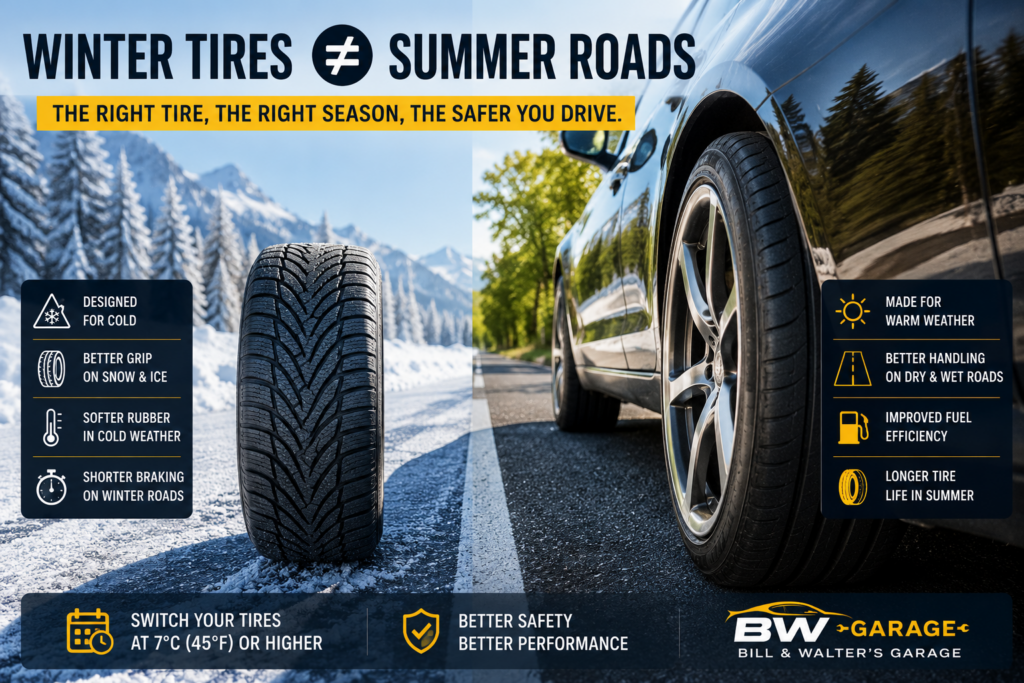
Winter tires and summer tires are engineered for completely different road conditions.
Rubber Compound
Winter tires use a much softer rubber compound that stays flexible when temperatures drop below 7°C (45°F).
Once temperatures rise above that point, the rubber becomes too soft, causing excessive wear and reduced stability.
Tread Design
Winter tires have:
- Deep tread blocks
- Aggressive siping
- Large grooves
These features improve grip on snow and ice but reduce road contact on dry pavement.
Summer tires use a firmer compound and shallower tread patterns to maximize traction and cornering on warm roads.
What Happens If You Drive on Winter Tires in Summer?
Driving on winter tires during hot weather creates several problems.
Reduced Handling and Steering Response
Soft rubber flexes more during cornering.
The vehicle may feel:
- Less responsive
- Less stable
- Slower to react during emergency maneuvers
This becomes especially noticeable on highways.
Longer Braking Distances
Because winter tire rubber overheats on warm pavement, braking performance decreases.
Longer stopping distances increase the risk of accidents, especially during emergency braking.
Much Faster Tire Wear
Heat rapidly wears away the softer winter compound.
Instead of lasting several seasons, your winter tires may wear out after only one summer.
Replacing a full set of tires costs far more than performing seasonal tire changes.
Lower Fuel Efficiency
Winter tires create more rolling resistance.
Higher rolling resistance means:
- More engine effort
- Increased fuel consumption
- Higher fuel costs
If your vehicle also feels sluggish, a professional <a href=”https://bw-garage.com/vehicle-diagnostics/”>Vehicle Diagnostics Service</a> can determine whether tire resistance or another mechanical issue is affecting performance.
Increased Hydroplaning Risk
Many drivers assume winter tires perform better in rain.
In reality, they are optimized for snow—not hot, wet pavement.
During heavy summer rain, worn winter tires may hydroplane sooner than properly maintained all-season or summer tires.
How Much Money Can You Lose?
Keeping winter tires on year-round may actually become more expensive.
Possible costs include:
- Replacing tires much sooner
- Higher fuel bills
- Reduced tire performance
- Uneven tire wear
- More frequent wheel alignment adjustments
Proper seasonal maintenance helps extend tire life.
Our <a href=”https://bw-garage.com/tire-replacement/”>Tire Replacement & Rotation Service</a> helps maximize tire performance and lifespan.
Is It Ever Okay to Drive on Winter Tires in Summer?
There are only a few situations where using winter tires during warm weather may be acceptable.
Short-Term Emergency
If you’re waiting for an appointment or replacement tires, driving carefully for a short period is generally acceptable.
Cooler Climates
Areas with unusually cool summers may experience less tire wear.
However, even moderate temperatures above 7°C will accelerate deterioration.
Better Alternative: All-Weather Tires
If you prefer using one set of tires all year, all-weather tires are a much better option than winter tires.
Unlike winter tires, all-weather tires are engineered for both summer driving and moderate winter conditions.
When Should You Switch Your Winter Tires?
Most tire professionals recommend changing your tires when daytime temperatures remain above 7°C (45°F) for several consecutive days.
Waiting too long means:
- Faster tire wear
- Poorer handling
- Reduced braking performance
- Higher fuel consumption
If you are unsure when to switch, read our guide:
<a href=”https://bw-garage.com/7×7-rule-for-winter-tires/”>What Is the 7×7 Rule for Winter Tires?</a>
Seasonal Tire Maintenance Tips
To get the most from your tires:
Rotate Tires Regularly
Regular tire rotation promotes even tread wear and extends tire life.
Learn more about our <a href=”https://bw-garage.com/tire-replacement/”>Tire Replacement & Rotation Service</a>.
Check Wheel Alignment
Poor alignment causes uneven tire wear regardless of tire type.
If your steering wheel feels off-center or your vehicle drifts while driving, schedule a professional <a href=”https://bw-garage.com/wheel-alignment/”>Wheel Alignment</a>.
Store Winter Tires Properly
When removing winter tires:
- Clean them thoroughly
- Store them in a cool, dry location
- Keep them away from direct sunlight
- Store them inside tire bags if possible
Proper storage significantly extends tire life.
Why Professional Tire Inspections Matter
Before switching tires each season, it’s a good idea to inspect:
- Tire tread depth
- Tire pressure
- Sidewall condition
- Suspension components
- Wheel alignment
- Brake system
A seasonal inspection can identify issues before they become expensive repairs.
Professional Tire Service in Burnaby
At Bill & Walter’s Garage, we help Burnaby and Vancouver drivers stay safe throughout every season.
Whether you need:
- <a href=”https://bw-garage.com/tire-replacement/”>Tire Replacement & Rotation</a>
- <a href=”https://bw-garage.com/wheel-alignment/”>Wheel Alignment</a>
- <a href=”https://bw-garage.com/brake-repair/”>Brake Repair</a>
- <a href=”https://bw-garage.com/vehicle-diagnostics/”>Vehicle Diagnostics</a>
our experienced technicians will ensure your vehicle is ready for the road.
Final Thoughts
Winter tires are built for cold temperatures—not summer heat.
Using them during warm weather can reduce handling, increase braking distances, lower fuel efficiency, and dramatically shorten tire life.
Switching to the correct seasonal tires is one of the simplest ways to improve safety while saving money over the long term.
If you’re ready for a seasonal tire change, Bill & Walter’s Garage is here to help.
Book your appointment today and enjoy safer, smoother driving all year long.