Brake inspection in Burnaby should be part of every driver’s regular vehicle maintenance plan. Your braking system is one of the most important safety systems in your car, yet many drivers wait until they hear grinding, feel vibration, or see a warning light before booking service.
Burnaby’s stop-and-go traffic, hills, wet roads, and frequent braking can place additional stress on brake pads, rotors, calipers, fluid, hoses, and related components. A professional brake inspection can identify early wear, improve stopping performance, and help prevent a smaller issue from becoming a more expensive repair.
In this guide, you’ll learn what squeaky brakes may mean, which warning signs require immediate attention, what technicians inspect, and when to schedule professional brake service.
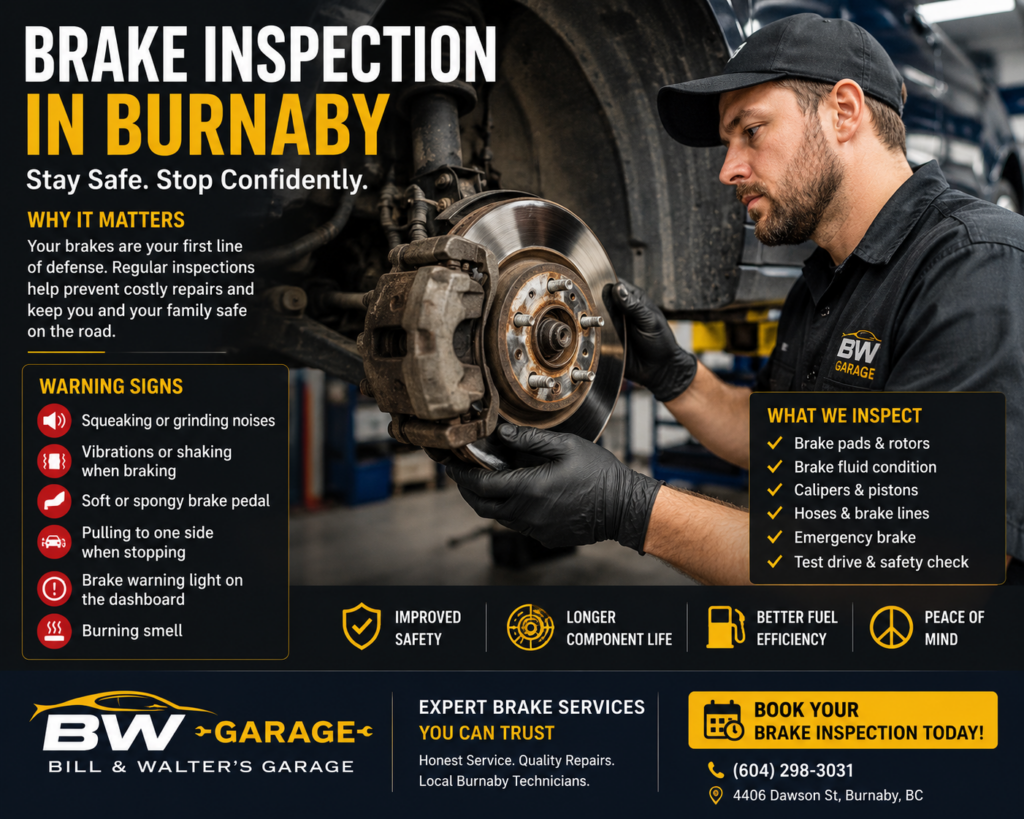
Why a Regular Brake Inspection Matters
Every time you press the brake pedal, friction and heat are created inside the braking system. Brake pads press against the rotors, hydraulic pressure moves through the brake lines, and the calipers apply the force required to slow the vehicle.
Over time, normal use can wear or damage:
- Brake pads
- Brake rotors
- Brake calipers
- Brake fluid
- Brake hoses and lines
- Parking-brake components
- ABS sensors and related electronics
Regular inspections help identify wear before braking performance becomes noticeably worse.
British Columbia regulations require vehicles operated on public roads to have effective braking systems, properly secured brake tubing and hoses, and adequate stopping performance.
If you are already hearing unusual noises or noticing changes in pedal feel, review our complete Brake Repair Services in Burnaby page.
Benefits of a Professional Brake Inspection
A complete brake inspection can provide several practical benefits.
Improved Driving Safety
Properly functioning brakes help maintain predictable stopping distances and vehicle control during normal and emergency braking.
Transport Canada notes that even advanced brake-assist systems still depend on a properly maintained brake system and suitable tires.
Lower Repair Costs
Replacing worn brake pads early may help prevent damage to rotors and calipers. Continuing to drive after the pads are worn through can turn a relatively simple service into a much larger repair.
Longer Component Life
Uneven pad wear, sticking calipers, contaminated fluid, or damaged hardware can shorten the life of otherwise usable components. Early diagnosis helps correct the cause rather than repeatedly replacing parts.
Better Fuel Economy
A sticking caliper or dragging brake can create resistance, increase heat, and force the engine to work harder.
Peace of Mind
Knowing the braking system has been inspected makes it easier to drive confidently in Burnaby’s rain, traffic, hills, and changing road conditions.
What Do Squeaky Brakes Mean?
Squeaky brakes are common, but the cause is not always the same.
Some brake noise is temporary. Other sounds indicate that parts are wearing or already damaged.
Worn Brake Pads
Many brake pads use a small metal wear indicator that produces a high-pitched squeal when the pad material becomes thin.
If the noise becomes frequent or louder, the pads should be measured.
Moisture and Surface Rust
Rain, condensation, or overnight moisture can create a light layer of surface rust on the brake rotors.
A brief squeak during the first few stops may disappear as the rotor surface is cleaned by normal braking.
Dust or Debris
Brake dust, dirt, small stones, or road debris may become trapped near the pads and rotors, causing temporary squeaking or scraping.
Brake-Pad Material
Some pad compounds naturally produce more noise than others. Lower-quality or very hard friction materials may squeak more frequently.
Missing Lubrication or Damaged Hardware
Dry contact points, worn clips, loose hardware, or seized slide pins can also create brake noise.
Not every squeak means the brakes are unsafe, but persistent noise should not be ignored. Read our guide on How to Know When Your Brakes Need Replacing for additional warning signs.
Brake Warning Signs You Should Never Ignore
Some symptoms indicate that the vehicle may no longer be safe to drive.
Grinding or Metal-on-Metal Noise
Grinding often means the brake-pad material has worn away and metal is contacting the rotor.
Continuing to drive can rapidly damage the rotors and reduce stopping performance.
Vibration or Pulsation
A shaking steering wheel, vibrating brake pedal, or pulsation while braking may be caused by:
- Rotor thickness variation
- Heat damage
- Uneven pad deposits
- Sticking calipers
- Worn suspension or steering components
A proper inspection is required because vibration does not always come from the brakes alone.
Soft or Spongy Brake Pedal
A soft pedal may indicate:
- Air in the hydraulic system
- A brake-fluid leak
- Contaminated fluid
- A damaged hose
- Master-cylinder problems
This symptom requires prompt attention.
Vehicle Pulling to One Side
Pulling during braking can be caused by:
- A sticking caliper
- Uneven brake-pad wear
- Brake-fluid or hydraulic problems
- Tire issues
- Suspension or alignment problems
If the vehicle also pulls during normal driving, review our Wheel Alignment Services in Burnaby.
Brake Warning Light
A dashboard warning may indicate:
- Low brake fluid
- Parking-brake activation
- ABS trouble
- Hydraulic-system problems
- Electronic brake-system faults
A warning light should be diagnosed rather than reset without testing.
Burning Smell or Smoke
A strong burning smell after driving may indicate overheated brakes, a seized caliper, or excessive friction.
If smoke is visible or braking performance has changed, stop driving when it is safe and arrange professional assistance.
Longer Stopping Distance
If the car takes longer to stop, feels unstable, or requires more pedal pressure, schedule an inspection immediately.
For urgent symptoms, see our guide to Same-Day Emergency Brake Repair in Burnaby.
How Often Should You Schedule a Brake Inspection?
There is no single inspection interval that applies to every vehicle.
The correct schedule depends on:
- Vehicle manufacturer recommendations
- Driving conditions
- Vehicle weight
- Driving style
- Towing or carrying heavy loads
- Brake-pad material
- Previous repair history
- City versus highway driving
As a practical guideline, have the brakes inspected:
- During regular vehicle maintenance
- At every second oil change
- Before a long road trip
- Before winter
- When installing or rotating tires
- When any warning sign appears
- At least once a year for vehicles used mainly in city traffic
Bill & Walter’s Garage recommends inspection approximately every 20,000 km, with earlier checks when symptoms appear or the vehicle is exposed to demanding driving conditions.
Do not wait for grinding or a warning light. Brake wear is usually less expensive to address before component damage occurs.
What Happens During a Professional Brake Inspection?
A professional brake inspection should evaluate the complete system rather than checking only the visible brake pads.
At Bill & Walter’s Garage, a brake inspection may include the following areas.
Brake Pad Measurement
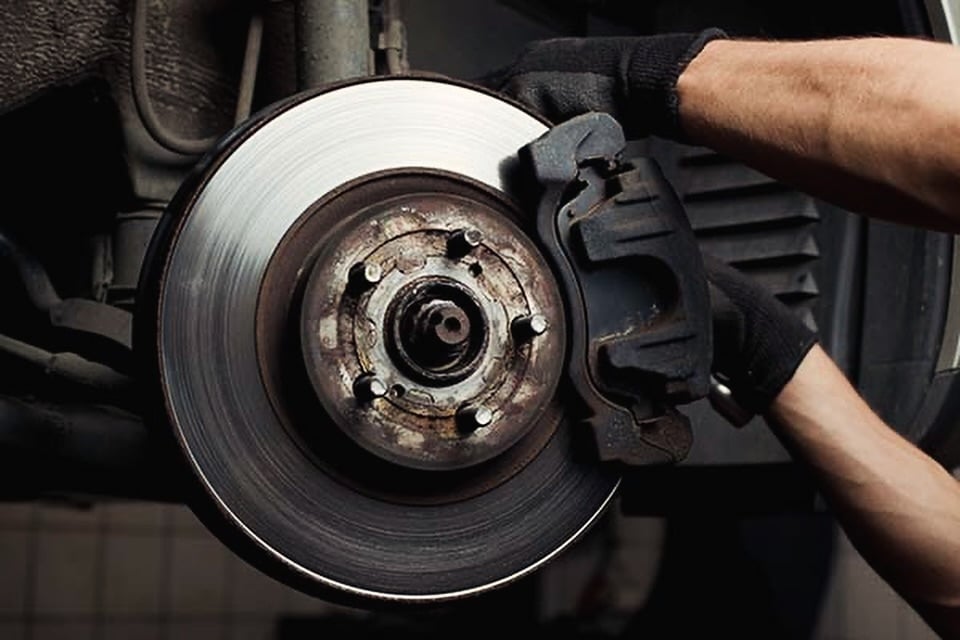
Technicians measure the remaining friction material and compare wear between the inner and outer pads.
Uneven wear may indicate a sticking caliper, seized slide pin, damaged hardware, or alignment problem.
Rotor Inspection
Rotors are inspected for:
- Scoring
- Cracks
- Heat spots
- Corrosion
- Uneven wear
- Thickness
- Runout or distortion
Rotors that are below minimum thickness must be replaced rather than resurfaced.
Brake-Fluid Condition
Brake fluid is inspected for:
- Low level
- Moisture contamination
- Discoloration
- Leaks
- Reduced performance
Brake fluid absorbs moisture over time, which may lower its boiling point and affect braking under heavy use.
Calipers and Pistons
The calipers should move freely and apply even pressure.
A seized piston or slide pin can create pulling, overheating, rapid pad wear, and reduced fuel efficiency.
Brake Hoses and Lines
Technicians inspect for:
- Cracks
- Bulges
- Corrosion
- Fluid leaks
- Chafing
- Improper routing
BC regulations require brake hoses and tubing to be secured and protected from wear, damage, kinking, and other conditions that could affect braking performance.
Parking Brake
The parking or emergency brake is checked for proper operation, adjustment, and holding force.
ABS and Warning Systems
If a warning light is present, technicians may scan the vehicle and inspect wheel-speed sensors, wiring, modules, and related components.
A professional Vehicle Diagnostic Test can help identify electronic or ABS-related problems.
Road Test
A road test may be used to evaluate:
- Pedal feel
- Stopping performance
- Brake noise
- Pulling
- Vibration
- ABS operation
- Parking-brake performance
How Burnaby Driving Conditions Affect Brake Wear
Brake life is influenced by local driving conditions.
Stop-and-Go Traffic
Frequent braking in urban traffic can wear pads faster than steady highway driving.
Hills
Repeated braking on downhill roads creates additional heat and may accelerate pad and rotor wear.
Rain and Moisture
Wet conditions can contribute to surface corrosion on rotors, especially when vehicles sit for extended periods.
Short Trips
Short drives may not fully dry the braking system, allowing moisture and surface rust to remain longer.
Potholes and Rough Roads
Road damage can affect tires, wheel alignment, suspension, and steering. These conditions may contribute to uneven braking or vehicle pulling.
Bill & Walter’s Garage identifies Burnaby traffic, hills, wet weather, and frequent braking as conditions that can increase brake wear.
DIY Brake Checks Between Professional Inspections
Drivers can watch for basic warning signs, but a visual check does not replace a full inspection.
Between appointments, monitor the following.
Listen for New Noises
Pay attention to:
- Squeaking
- Grinding
- Scraping
- Clicking
- Clunking
Monitor Pedal Feel
The brake pedal should feel consistent.
A sudden change in firmness, travel, or response should be investigated.
Watch for Pulling or Vibration
Notice whether the vehicle pulls during braking or whether the steering wheel and pedal vibrate.
Check the Dashboard
Do not ignore brake, ABS, traction-control, or stability-control warning lights.
Notice Burning Smells
A burning smell after normal driving may indicate overheating or a dragging brake.
Watch Stopping Distance
If stopping distance increases or the vehicle feels less controlled, stop delaying the inspection.
How to Reduce Brake Noise and Extend Brake Life
Good driving and maintenance habits can help improve brake life.
Use Quality Brake Components
Choose parts suitable for the vehicle and driving conditions.
Bill & Walter’s Garage states that it uses OEM-quality brake components for its repair services.
Avoid Unnecessary Hard Braking
Leave more following distance and brake gradually when road conditions allow.
Inspect Slide Pins and Hardware
Brake hardware should be inspected, cleaned, lubricated, or replaced when required during pad service.
Maintain Brake Fluid
Follow the vehicle manufacturer’s recommendations for brake-fluid inspection and replacement.
Avoid Riding the Brakes Downhill
Use appropriate lower gears where suitable and avoid keeping constant pressure on the brake pedal for long downhill sections.
Keep Tires and Alignment in Good Condition
Tires, suspension, and alignment affect vehicle stability and braking behaviour.
Schedule Wheel Alignment in Burnaby if the vehicle drifts, the steering wheel is off-centre, or the tires wear unevenly.
How Much Does a Brake Inspection or Repair Cost in Burnaby?
Brake-service cost depends on:
- Vehicle make and model
- Front or rear axle
- Pad condition
- Rotor condition
- Caliper condition
- ABS or electronic faults
- Part quality
- Labour requirements
- Corrosion and seized hardware
A proper inspection should come before a final repair quote.
Bill & Walter’s Garage publishes current general pricing examples for brake pads, rotors, fluid service, calipers, and full brake jobs, but actual pricing depends on the specific vehicle and condition.
The shop also states that customers receive a clear estimate before repair work begins.
Avoid writing a fixed price into the article unless the business intends to keep it updated. Service prices, promotions, and part costs can change.
Why Choose Bill & Walter’s Garage for Brake Inspection in Burnaby?
Bill & Walter’s Garage has operated in Burnaby since 1956 and provides brake inspections, pad and rotor replacement, caliper service, brake-fluid service, ABS diagnostics, and parking-brake repairs.
The current brake-service page lists:
- Certified technicians
- OEM-quality parts
- Written estimates
- Same-day service with an appointment
- Warranty coverage
- Courtesy vehicles with advance booking
- Service for domestic, import, and European vehicles
Warranty terms, promotions, and availability should always be confirmed when booking.
Frequently Asked Questions
How do I know if my brakes need inspection?
Common signs include squeaking, grinding, vibration, pulling, a soft pedal, warning lights, burning smells, or longer stopping distances.
Are squeaky brakes always dangerous?
No. Moisture, surface rust, dust, or pad material can create temporary noise. Persistent or worsening squeaks should still be inspected.
Can I drive with grinding brakes?
Driving with grinding brakes is not recommended. The brake pads may be completely worn, and continued driving can damage the rotors and reduce braking performance.
How long does a brake inspection take?
The exact time depends on the vehicle and the depth of inspection. A basic inspection may be completed relatively quickly, while diagnostic testing or wheel removal can require additional time.
How often should brake fluid be changed?
Follow the vehicle manufacturer’s schedule. Fluid condition, moisture content, driving conditions, and system design may affect the interval.
Why does my car pull when braking?
Possible causes include a sticking caliper, uneven pad wear, hydraulic problems, tire issues, suspension wear, or incorrect wheel alignment.
Can bad brakes reduce fuel efficiency?
A dragging brake or seized caliper can increase rolling resistance and fuel consumption.
Should brakes be checked before winter?
Yes. Wet roads, low traction, and changing winter conditions make predictable braking especially important.
Book a Brake Inspection in Burnaby
If your brakes are squeaking, grinding, vibrating, pulling, or showing a warning light, do not wait for the problem to become more serious.
Bill & Walter’s Garage provides professional brake inspections and brake repair for drivers in Burnaby and nearby areas.
Book your brake inspection or call the shop to discuss your symptoms.
Bill & Walter’s Garage
4406 Dawson St, Burnaby, BC V5C 4B9
(604) 298-3031
Monday–Friday: 7:00 AM–5:30 PM, Saturday: 7:30 AM–4:00 PM