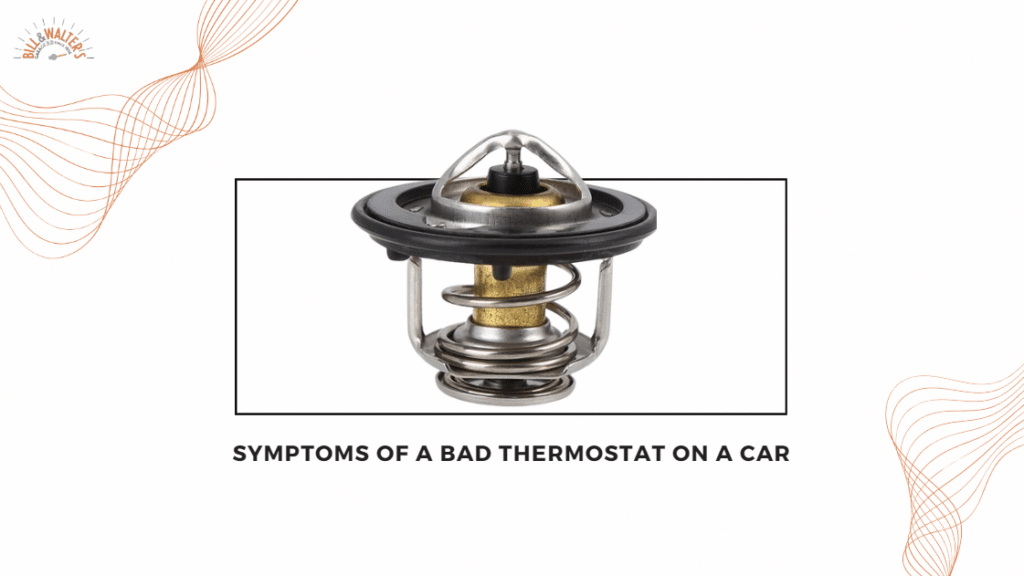
Quick answer: The seven most common bad thermostat symptoms in a car are engine overheating, an engine that runs too cool, a temperature gauge that rises and falls, weak cabin heat, coolant leaks near the thermostat housing, a check-engine light, and reduced fuel economy. A thermostat can fail in either the open or closed position, and the symptoms are different.
If the temperature gauge enters the red zone, a coolant warning appears, or you see steam, pull over safely and shut the engine off. Continuing to drive an overheating vehicle can cause severe engine damage. Never remove the radiator or coolant-reservoir cap while the system is hot.
What Does a Car Thermostat Do?
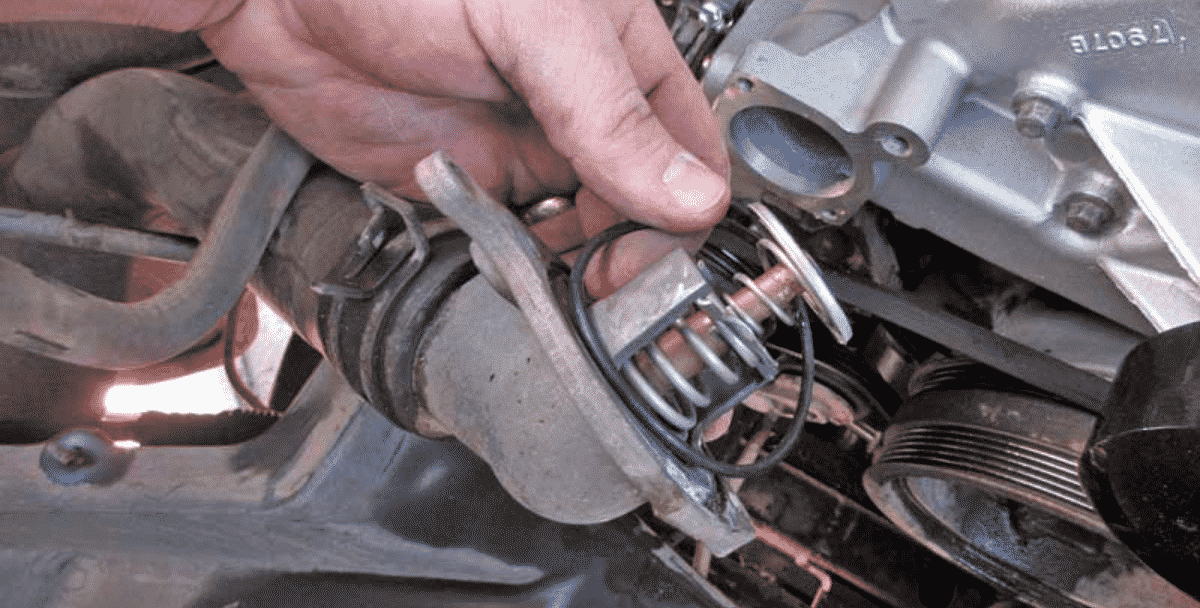
The thermostat is a temperature-controlled valve in the engine cooling system. When the engine is cold, it stays closed so the engine warms up quickly. As the coolant reaches operating temperature, the thermostat opens and allows coolant to circulate through the radiator.
A thermostat that is stuck closed can restrict coolant flow and cause overheating. A thermostat that is stuck open can make the engine warm up slowly or run cooler than intended. Because other cooling-system problems can create similar symptoms, a proper diagnosis is important before replacing parts.
7 Bad Thermostat Symptoms in a Car
1. The Engine Overheats
Rapidly rising engine temperature is the most urgent warning sign. A thermostat stuck closed may prevent hot coolant from reaching the radiator. The gauge may move toward the red zone, a temperature warning may appear, or steam may come from under the hood.
Overheating can also be caused by low coolant, a leak, a failed water pump, a cooling-fan problem or a blocked radiator. Do not assume the thermostat is the only possible cause.
2. The Engine Runs Too Cool or Warms Up Slowly
If the thermostat is stuck open, coolant may circulate through the radiator before the engine reaches its designed operating temperature. The temperature gauge may stay unusually low, especially in cold weather, and the engine may take much longer than normal to warm up.
3. The Temperature Gauge Fluctuates
A gauge that repeatedly rises and falls can indicate irregular coolant flow. Sudden temperature changes may come from a sticking thermostat, trapped air, low coolant or another cooling-system fault. Normal readings vary by vehicle, but large or repeated swings deserve attention.
4. The Cabin Heater Blows Lukewarm or Cold Air
Your heater uses hot engine coolant to warm the cabin. If the thermostat is stuck open and the engine never reaches normal temperature, the heater may produce weak or inconsistent heat. Low coolant or a restricted heater core can cause the same symptom.
5. Coolant Leaks or Dried Residue Appear Near the Housing
A damaged gasket, corroded housing or excessive cooling-system pressure may leave wet coolant or dried coloured residue around the thermostat housing. A leak can lower the coolant level and quickly turn a minor issue into an overheating problem.
6. The Check-Engine Light Comes On
Some vehicles monitor how quickly the engine reaches operating temperature. A thermostat-related fault may trigger the check-engine light and a code such as P0128. A code is a diagnostic clue, not proof that the thermostat itself has failed, so the cooling system should still be tested.
7. Fuel Economy Drops
An engine that continually runs cooler than intended may stay in a richer warm-up strategy longer than normal. That can increase fuel consumption and emissions. Reduced fuel economy has many possible causes, so it should be considered together with temperature and heater symptoms.
Stuck-Open vs. Stuck-Closed Thermostat Symptoms
- Stuck open: slow warm-up, low temperature-gauge reading, weak cabin heat and possible loss of fuel economy.
- Stuck closed: fast temperature rise, overheating, coolant warning, boiling coolant or steam.
- Sticking intermittently: temperature fluctuations and symptoms that come and go.
Can a Bad Thermostat Affect the AC in a Car?
Usually not directly, but it can affect the A/C indirectly. The engine thermostat controls coolant flow; it does not normally control refrigerant flow through the air-conditioning system. However, if a stuck-closed thermostat causes the engine to overheat, some vehicles reduce or switch off the A/C compressor to lower engine load and protect the powertrain.
A thermostat stuck open is more likely to affect cabin heat than air conditioning. If the engine temperature is normal but the A/C blows warm air, the cause is more likely to be low refrigerant, a compressor or electrical fault, a condenser-fan issue, or another A/C-system problem. Our Auto A/C Repair service in Burnaby explains the next diagnostic steps.
How Do You Diagnose a Bad Car Thermostat?
A technician can compare engine temperature, scan-tool data and coolant-hose temperatures as the engine warms up. The diagnosis may also include checking coolant level and condition, pressure-testing for leaks, inspecting the housing and gasket, confirming radiator-fan operation and scanning for trouble codes.
Simply seeing one symptom is not enough to confirm a bad thermostat. If you need the cause identified before replacing parts, book a professional vehicle diagnostic test.
Can You Drive With a Bad Thermostat?
Do not continue driving if the engine is overheating, the warning light is on or steam is visible. Stop in a safe place, switch the engine off and allow it to cool. Driving with a thermostat stuck open may seem less urgent, but prolonged cold operation can reduce heater performance, fuel economy and engine efficiency. Arrange an inspection rather than waiting for the problem to worsen.
How Much Does Thermostat Replacement Cost?
At Bill & Walter’s Garage in Burnaby, thermostat replacement starts at about $350 CAD. The final price depends entirely on the vehicle: thermostat location, labour time, coolant specification and whether the housing or related components also need replacement. Some thermostats are easy to access; others are integrated into a larger housing, which adds labour. An inspection gives you an accurate quote for your specific vehicle.
Because bad thermostat symptoms often overlap with a failing water pump, radiator, cooling fan or low coolant, confirming the cause first keeps you from paying for parts you don’t need.
Frequently Asked Questions
How can I tell if my car thermostat is bad?
Look for a combination of temperature-gauge changes, overheating or slow warm-up, weak cabin heat, coolant leaks and a check-engine light. Because low coolant, a water pump, radiator or cooling-fan fault can look similar, testing is the safest way to confirm the cause.
Will a bad thermostat always cause overheating?
No. A thermostat stuck closed can cause overheating, while one stuck open often makes the engine run too cool. An intermittently sticking thermostat may cause the gauge to fluctuate.
Does a bad thermostat affect the heater?
Yes. A stuck-open thermostat can prevent the coolant from getting hot enough for strong cabin heat. Low coolant and heater-core problems can also cause poor heat.
Can a bad thermostat cause the A/C to stop working?
It can happen indirectly if the engine overheats and the vehicle disables the A/C compressor for protection. If engine temperature is normal, an A/C-specific fault is more likely.
Thermostat Diagnosis in Burnaby
Bill & Walter’s Garage has served Burnaby drivers since 1956. If your vehicle overheats, runs unusually cool or has inconsistent heat or A/C performance, our technicians can inspect the cooling system and identify the cause before parts are replaced. Request an appointment or call (604) 298-3031.