Winter engine problems often become noticeable when a vehicle struggles to start on cold mornings. Low temperatures place extra stress on the battery, engine oil, ignition system, belts, hoses, and electronic sensors. With proper preventive maintenance, many cold-start issues can be identified before they cause a breakdown.
This guide explains why cold starts cause damage and what you can do practically and smartly to protect your engine before winter takes its toll.
Drivers should also prepare for changing winter road conditions and carry appropriate emergency equipment. Review the official Government of British Columbia winter driving guidance
How to Prevent Winter Engine Problems Before Cold Weather Arrives
Why Cold Starts Are Hard on Your Engine
When temperatures drop, engine oil thickens, batteries lose power, and metal components contract. This creates a perfect storm where your engine has to work harder with less lubrication and weaker electrical support.
Common cold start issues include:
- Slow or failed ignition
- Increased engine wear in the first few minutes
- Poor fuel combustion
- Strain on belts, hoses, and sensors
Preventing these issues isn’t about reacting it’s about preparation.
Essential Tips to Prevent Winter Engine Problems
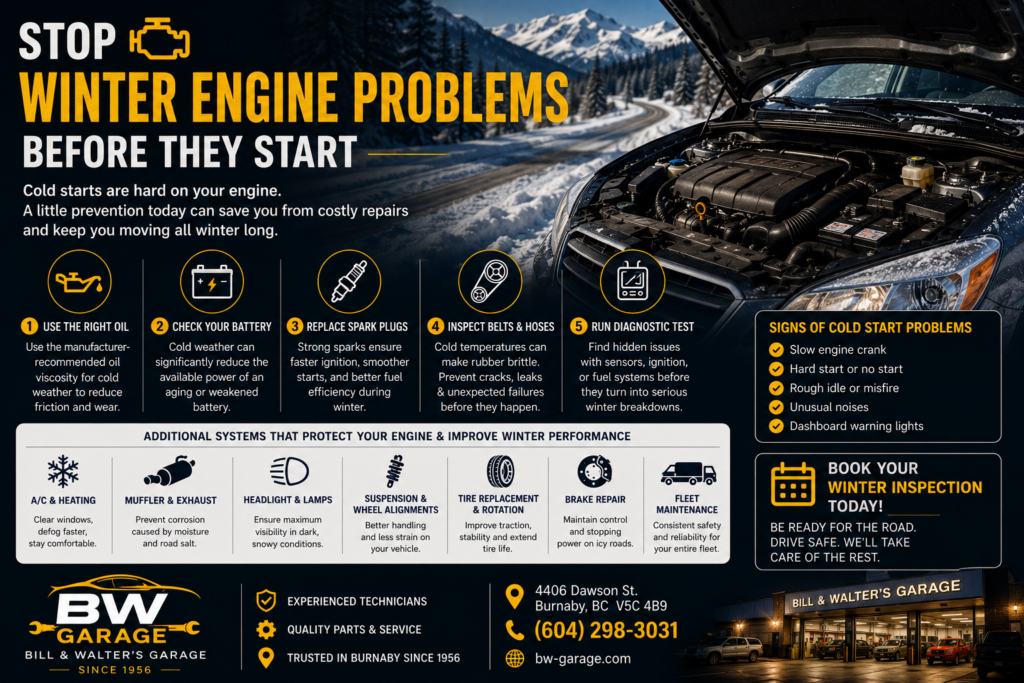
1. Use the Right Oil for Cold Weather
Oil is your engine’s first line of defense during a cold start. Thick or old oil doesn’t circulate fast enough in low temperatures, increasing friction and wear.
A timely Car Oil Change with winter grade oil helps:
- Improve lubrication at startup
- Reduce engine strain
- Protect internal components during extreme cold
Using clean oil with the correct manufacturer-approved viscosity helps the engine circulate lubricant more effectively during cold starts. Review our preventive maintenance services
2. Check Your Battery Before It Fails
Cold weather can significantly reduce the available power of an aging or weakened battery. A weak battery might work fine in summer but fail instantly in winter.
A Car Battery Replacement or professional battery test can save you from no start situations when you least expect them.
3. Spark Plugs Matter More Than You Think
Cold engines need a strong spark to ignite fuel properly. Worn plugs cause delayed starts, misfires, and rough idling.
Regular Spark Plugs Replacement ensures:
- Faster ignition
- Smoother cold starts
- Better fuel efficiency during winter
4. Inspect Belts, Hoses & Rubber Components
Cold temperatures make rubber brittle. Cracked hoses or loose belts often fail during winter startups.
Preventive Belts and Hoses Services reduce the risk of:
- Sudden coolant leaks
- Alternator or power steering failure
- Engine overheating despite cold weather
5. Don’t Ignore Diagnostics
Modern engines rely on sensors that react differently in cold conditions. A hidden fault may only appear during winter.
A professional Diagnose Test can identify:
- Sensor malfunctions
- Fuel system issues
- Ignition timing problems
before they turn into serious winter breakdowns.
6. Supporting Systems That Protect Your Engine
While engine health is the focus, other systems indirectly affect cold starts and winter performance:
- Auto Air Conditioning Repair keeps defogging systems effective, reducing engine load
- Muffler & Exhaust checks prevent condensation related corrosion
- Headlight & Lamps ensure safe early morning visibility
- Suspension, Wheel Alignments, and Tire Replacement & Rotation improve traction, reducing drivetrain stress
- Brake Repair maintains control during icy starts
- Fleet Maintenance ensures consistent winter readiness across multiple vehicles
When Should You Get Professional Help?
If cold starts are becoming slower, louder, or less reliable, it’s time to visit a mechanic near you or a trusted auto repair shop near you before winter turns a small issue into an expensive repair.
Early inspections cost less, take less time, and prevent roadside emergencies.
Preventing winter engine problems is usually less expensive than repairing damage after a no-start condition or roadside breakdown. A pre-winter inspection allows technicians to test the battery, inspect ignition components, check fluids, and identify developing mechanical or electrical faults.
Final Thoughts: Cold Starts Shouldn’t Shorten Your Engine’s Life
Winter doesn’t damage engines lack of preparation does. With the right maintenance, your car can start smoothly, warm up efficiently, and stay reliable throughout the coldest months.
At Bill & Walter’s Garage, we specialize in preventing winter engine problems before they start. Book your winter engine check today and drive through 2026 with confidence, reliability, and peace of mind.